
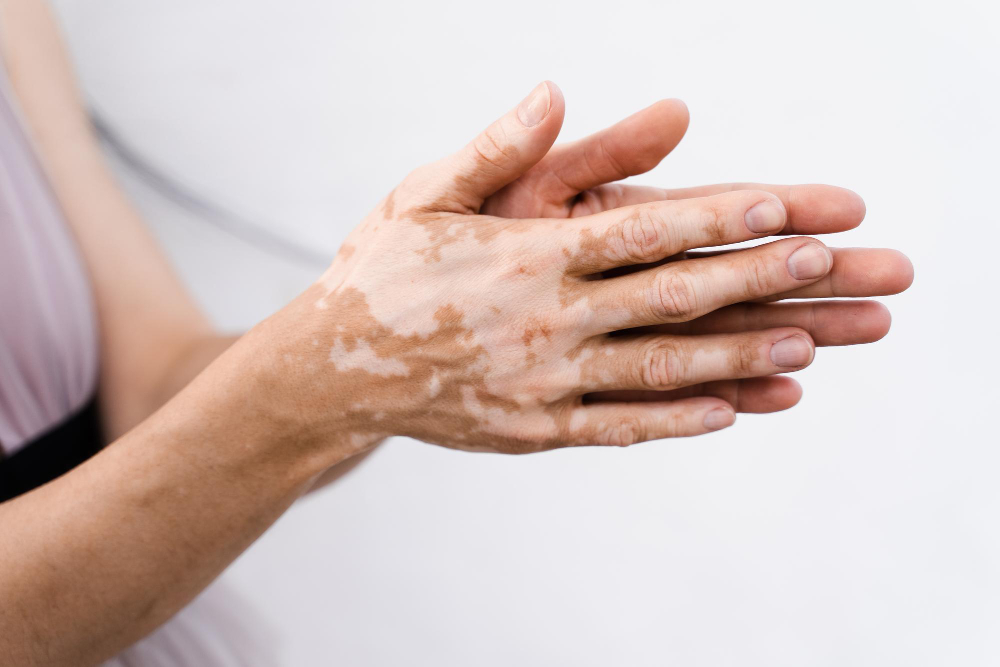
What is Vitiligo?
Vitiligo is a skin condition that causes white patches on the skin. These patches appear when skin cells called melanocytes stop making pigment. As a result, the skin loses its normal color. Vitiligo can affect people of any age, gender, or background. Although it is not contagious or life-threatening, it can impact self-esteem. Many people search for Vitiligo treatment options to help manage the condition.
Symptoms of Vitiligo
Most often, the first sign of Vitiligo is a small, pale spot on the skin. Over time, these spots may grow or join together. In many cases, the patches are more noticeable on darker skin. However, Vitiligo can appear anywhere on the body. Common symptoms include:
Sometimes, the patches spread slowly. But in other cases, they may stay the same for years.
Causes and Risk Factors
Doctors do not know the exact cause of Vitiligo. However, several factors may play a role. For example, Vitiligo is thought to be an autoimmune condition. This means the body’s immune system attacks its own pigment cells. Other possible causes include:
Although anyone can get Vitiligo, it is more common in people with a family history of the condition. Also, having other autoimmune diseases may increase your risk.
How Vitiligo is Diagnosed
If you notice white patches on your skin, it is important to see a dermatologist. First, the doctor will look at your skin and ask about your health history. Next, they may use a special lamp called a Wood’s lamp to see the patches more clearly. Sometimes, a small skin sample (biopsy) is needed. Blood tests may also be done to check for other autoimmune conditions. Early diagnosis can help guide the best Vitiligo treatment options.
Treatment Options for Vitiligo
While there is no cure for Vitiligo, many treatments can help restore skin color or slow the spread of white patches. The best option depends on your age, health, and how much skin is affected. Common Vitiligo treatment options include:
In some cities, you can find clinics that offer advanced Vitiligo treatment. For example, people may search for “Vitiligo treatment in New York” or their local area. Always talk to a dermatologist before starting any treatment.
Lifestyle Tips and Coping Strategies
Living with Vitiligo can be challenging, but there are ways to cope. For instance, protecting your skin from the sun is very important. Sunburn can make patches more noticeable. Here are some helpful tips:
Remember, Vitiligo does not affect your health, but it can affect how you feel. Support from family and friends can make a big difference.
Prevention and Myths
Currently, there is no proven way to prevent Vitiligo. However, some people believe myths about the condition. For example, Vitiligo is not caused by eating certain foods or touching someone with the condition. It is not contagious. Also, Vitiligo does not mean you are unhealthy. Understanding the facts can help reduce fear and stigma.
When to See a Dermatologist
If you notice new white patches or changes in your skin, it is wise to see a dermatologist. Early care can help manage symptoms and offer the best Vitiligo treatment options. In addition, a skin doctor can answer your questions and suggest ways to protect your skin. Do not wait if you feel worried or unsure. Professional advice can help you feel more confident and in control.
If you notice changes in your skin, consult Dr Sharanya for personalized advice.