
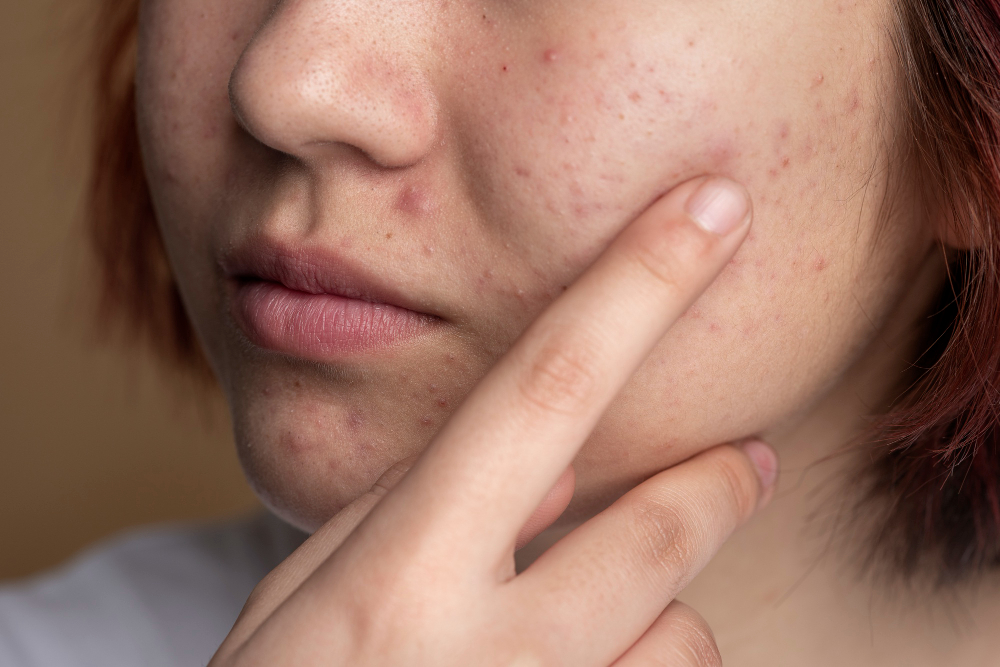
What Is Acne Vulgaris?
Acne vulgaris is a common skin problem. It causes pimples, blackheads, and whiteheads, mostly on the face, back, and chest. Many people wonder, “Why does acne vulgaris occur?” Understanding the causes of acne vulgaris can help you manage breakouts. There are many factors behind acne breakouts. Some are within your control, while others are not. Let’s explore the common triggers for acne vulgaris and how they affect your skin.
Main Causes of Acne Vulgaris
Several factors can lead to acne vulgaris. However, not everyone with these risk factors will get acne. Here are the main causes:
How These Causes Lead to Acne Formation
Now, let’s see how these causes work. First, your skin has tiny holes called pores. These pores can get blocked by oil, dead skin, or bacteria. When this happens, pimples form. For example, hormones can make your skin produce more oil. Likewise, stress can increase oil production. In addition, some foods may cause inflammation, making acne worse. Medications or environmental factors can also block pores. As a result, you may notice more breakouts. According to the American Academy of Dermatology, these factors often work together to cause acne.
Common Myths About Acne Causes
Many myths surround acne. But not all are true. Here are some common myths:
Therefore, it is important to know the real causes and not believe every myth.
When to See a Dermatologist
Sometimes, acne does not improve with home care. In such cases, you should see a dermatologist. For example, if your acne is painful, leaves scars, or affects your confidence, professional help is best. Additionally, if over-the-counter products do not work, a dermatologist can suggest better treatments. Early care can prevent long-term skin problems.
Consult a dermatologist Dr.Sharanya for personalized advice on managing acne vulgaris.